










Fallout S2 Bathroom Clash, Why Theroux’s House Slaps Cooper With “Pinko

[ad_1]
Exploring the tensions and humor in the latest Fallout Season 2 episode.
- Theroux and Cooper’s clash reveals deeper ideological differences.
- The bathroom setting serves as a comedic yet tense backdrop.
- Character development peaks as personal conflicts come to light.
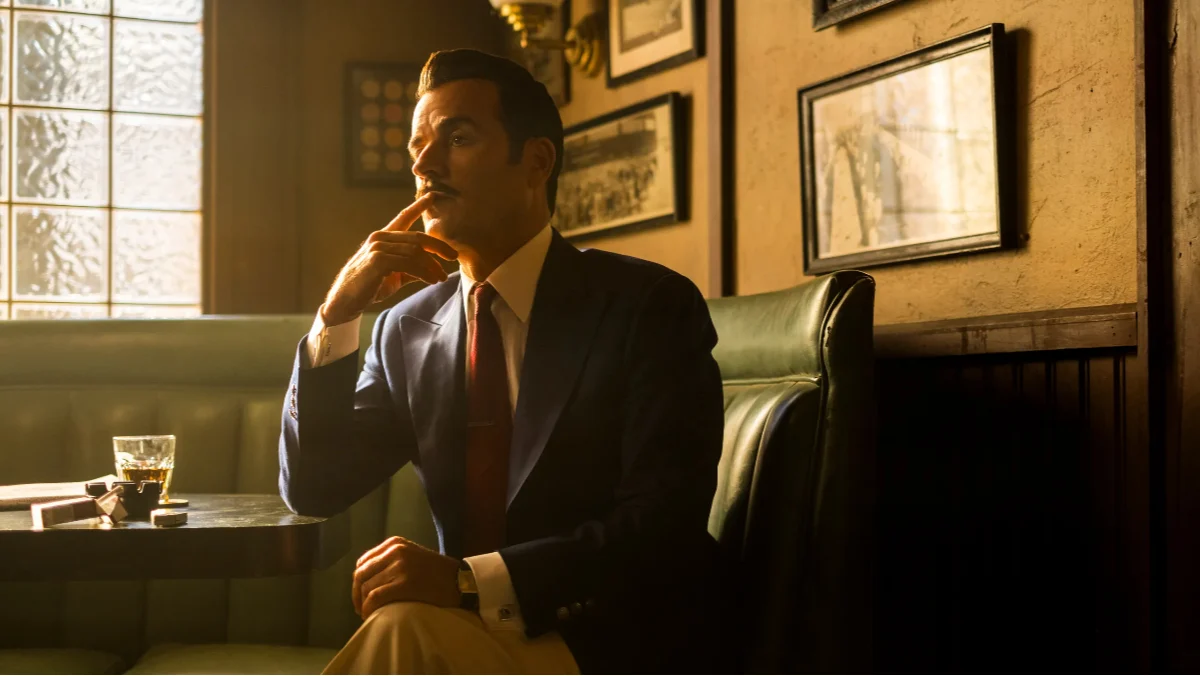
Fans lost it over that tense restroom face-off in Fallout Season 2, episode 3. Justin Theroux’s Robert House corners Walton Goggins’ Cooper Howard mid-urinal, sniffing out his politics with surgical precision.
House probes Cooper’s ties to a veteran pal getting an award, then hits him point-blank: Is Cooper aware his buddy’s a pinko? Does Cooper count as one, too? The moment crackles because Cooper just got tasked with assassinating House, but has zero clue he’s facing the target.
This isn’t random trash talk. House operates like a chess master in a pinstripe suit, testing loyalties amid rising U.S.-China tensions. Cooper, fresh off the Sino-American War, supports his comrade Charlie without batting an eye. House clocks that instantly, using “pinko” to paint Cooper as a suspect.
Viewers on Reddit and Twitter lit up post-episode, debating if House smells the hit job or just hates Hollywood types questioning the system.
Theroux nails House’s vibe: calm menace mixed with creepy charm. He leans in close, eyes locked in the mirror, dropping lines about power structures while Cooper zips up.
Social media exploded with “GhoulHouse” ship edits, turning the standoff into meme gold. One viral clip loops House’s drawl, captioned “When your assassin’s bladder betrays him.” The chemistry sells it, but the slur lands the real gut punch.
Also Read: Breaking Bad Fly Episode Redemption, Hated Filler or Hidden Genius 15 Years On?
Word count so far keeps the pace snappy, yet that five-letter jab carries decades of baggage. House doesn’t yell; he whispers poison. Cooper brushes it off with a vet jab, but fans sense cracks forming in his all-American facade. This sets up why the Ghoul despises corporate overlords 200 years later.
“Pinko” Slur’s Red Scare Roots
Back in real history, “pinko” slithered out during America’s 1940s-50s Red Scare. Think McCarthy hearings and blacklists: full communists got called “reds,” but sympathizers or soft liberals earned “pinko” as a lighter shade dig.
Pink hinted at diluted red, perfect for smearing actors, writers, and anyone not waving the flag hard enough. Fallout amps this up in its atomic ’50s fantasy, where nukes loom, and corps run the show.
ScreenRant breaks it down clean: the term targeted folks sharing some communist gripes without joining the party. Cooper feels uneasy.
War hardened him against China, but back home, corporate greed sours him. He skips a few radical meetings after befriending a true believer, earning whispers. Fallout Season 2 flashbacks show this shift: from war hero to skeptical star, eyeing Vault-Tec’s power plays.
House wields it like a weapon because he’s peak capitalism incarnate. RobCo boss Robert House built New Vegas on bets and bots, viewing dissent as weakness.
Calling Cooper pinko accuses him of flirting with the enemy while America fights resource wars. Mirror Online notes House downplays the vet award first, framing radicals as jokes before the real probe. It’s calculated: label your foe to neutralize him before he strikes.


In the show’s world, this mirrors broader divides. Pre-war America obsesses over commie spies amid oil shortages and Chinese invasions. Cooper’s disillusionment grows; he sees citizens as pawns.
House empathizes with pinko complaints on institutions, calling them justified, yet twists them to probe betrayal. Nerdist highlights that nuance: House gets the gripes but demands loyalty. Fans tie it to Cooper’s arc, explaining his Ghoul cynicism toward NCR and Legion alike.
Period authenticity shines. Fallout nails ’50s paranoia with diners, tailfins, and witch hunts. “Pinko” fits seamlessly, echoing HUAC trials where stars like Charlie Chaplin fled. Cooper’s not preaching revolution, but his silence screams. House marks him as unreliable, a loose screw in the war machine.
Cooper’s Slide Fuels Ghoul Legacy
Cooper Howard starts Season 2 as Hollywood’s golden boy, but “pinko” marks his pivot. Post-war, he toasts victory, but reality bites: corps hoard vaults while troops rot. Befriending radicals pulls him leftward, not full red.
Public smears follow those meetings, blackballing gigs. By the time House corners him, Cooper’s weighing Moldaver’s plea to kill the missile man.
This clash foreshadows everything. House senses a threat, maybe from intel or gut. Cooper plays tough, snarking about non-vets, but inside, doubts brew. Flashbacks link to present: Ghoul hunts House in New Vegas, grudge eternal.
Esquire recap notes Cooper’s strong front crumbles later, tying to NCR-Legion scraps. That slur? Catalyst for his moral slide into irradiated immortality.
Fallout lore buffs nod to games: House rules Vegas post-bombs, pitting factions. TV tweaks it, making Theroux’s take personal. Theroux told Nerdist he’s giddy working with Goggins; scenes pop with banter.
Fans speculate House’s double lets him prowl incognito, explaining the bathroom sneak. YouTube breakdowns call “pinko” the universe key: ideology trumps survival in wasteland politics.
Wider impact hits home. Season 2 blends laughs with dread, using slurs to humanize pre-war rot. Cooper embodies vets questioning endless war, corps, and bombs.
The house represents unchecked power, testing foes casually. Social media buzz predicts escalation: will Ghoul clip House, or flip script? Episode 3’s “Profligate” title nods to waste, mirroring pinko excess.
Theroux amps House beyond games: sarcastic, invasive, magnetic. Goggins’ Cooper radiates charm, masking pain. Slur humanizes both, sparking fan theories on alliances and betrayals.
As bombs fall soon, this bathroom spat echoes. Fallout thrives on such layers, turning insults into lore gold. Viewers stay hooked, parsing every glance for clues.
Also Read: Father, Mother, Sister, Brother Review: Jarmusch’s Coziest Family Hangout Stumbles On Its Own Gimmick
People Also Ask
- What happens during the bathroom confrontation in Fallout Season 2, episode 3?
-
Justin Theroux’s character, Robert House, confronts Walton Goggins’ character, Cooper Howard, in a restroom, questioning his political loyalties and using the term ‘pinko’ to imply suspicion.
- What does the term ‘pinko’ signify in the context of the show?
-
‘Pinko’ refers to individuals perceived as sympathetic to communism without being full communists, rooted in the historical Red Scare of the 1940s-50s.
- How does the confrontation reflect the characters’ backgrounds?
-
House uses the term ‘pinko’ to challenge Cooper’s loyalties, highlighting Cooper’s disillusionment after the Sino-American War and his growing skepticism towards corporate power.
- What is the significance of the setting and time period in Fallout Season 2?
-
The show is set in a post-war America that reflects 1950s paranoia, with themes of political loyalty and corporate greed, mirroring historical events like the McCarthy hearings.
- How did fans react to the bathroom scene on social media?
-
Fans on Reddit and Twitter engaged in discussions and created memes, particularly around the chemistry between the characters and the implications of the ‘pinko’ slur.
- What does Cooper’s character arc represent in the series?
-
Cooper’s character transitions from a celebrated war hero to a more cynical figure questioning authority and corporate interests, marking a significant shift in his moral perspective.
[ad_2]