










Love on the Spectrum Renewed for Season 5 as Connor Tomlinson Exits

[ad_1]
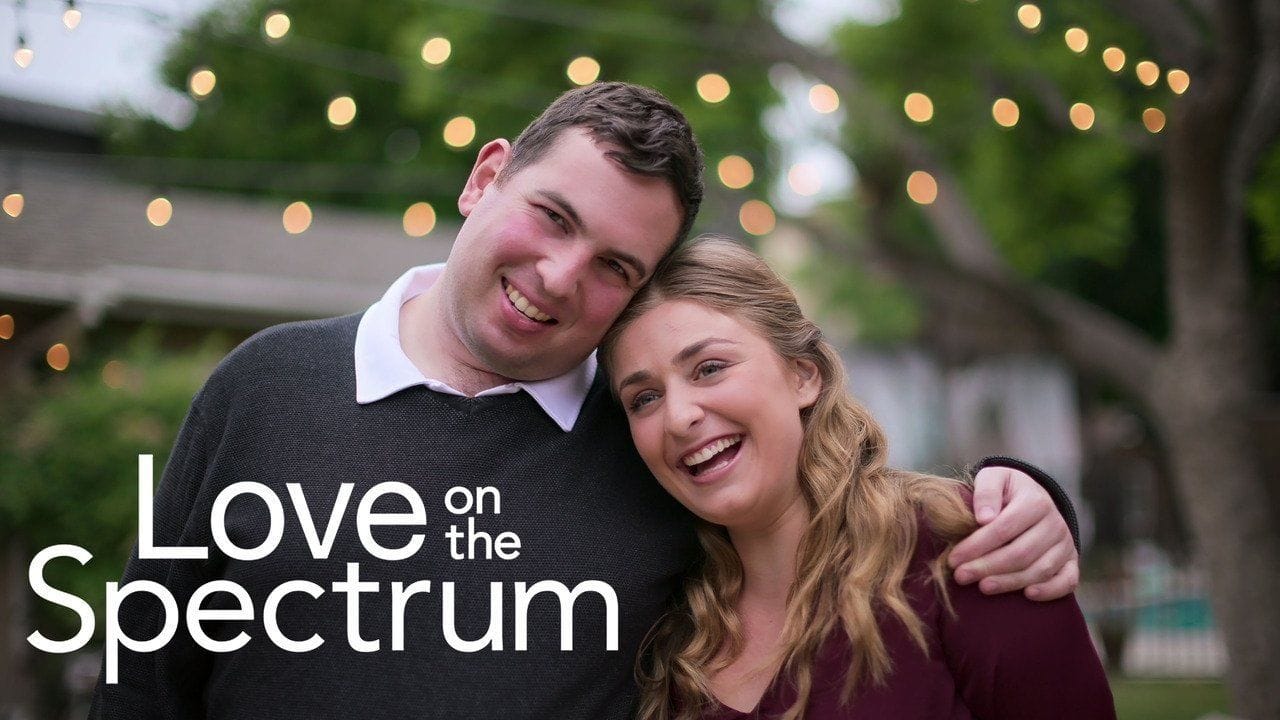
Netflix is doubling down on one of its most quietly successful unscripted series. Love on the Spectrum has been renewed for a fifth season, extending a run that has steadily built both audience loyalty and industry credibility without relying on the spectacle that defines most dating shows.
The timing is deliberate. Season 4 arrived on April 1 at the start of Autism Awareness Month, continuing a pattern that has helped position the series as more than just another reality entry. It operates in a different register, less engineered, more observational, and that distinction has proven durable.
Over multiple seasons, the show has not only reached Netflix’s Global Top 10 but also accumulated a consistent stream of recognition at the Primetime Emmy Awards, including wins for unstructured reality program, casting, and directing. That combination, viewership plus awards traction, typically signals long-term stability in the current streaming environment.
Connor Tomlinson Exits
What makes the renewal notable, however, is not just the continuation but the shift happening alongside it. Connor Tomlinson, one of the series’ most recognizable and widely embraced participants, has confirmed he will not return.
After appearing across three seasons, Tomlinson described his arc as complete, suggesting that stepping away is less an exit than a natural endpoint. His comment about “passing the torch” lands with a degree of self-awareness; Love on the Spectrum has never been built around fixed personalities in the way traditional reality franchises are. Its continuity comes from the format, not the cast.
Still, his absence will be felt. Tomlinson served as a narrative anchor during his time on the show, offering a throughline that helped ground the series as new participants rotated in. His decision to pivot toward acting, particularly voice work, also underscores a subtle but recurring outcome of the series: participants leave not just with relationship experiences, but with expanded personal and professional ambitions.
Season 4 itself reflects a show that is evolving without fundamentally changing. Returning couples like Madison and Tyler, Connor and Georgie, and James and Shelley provide continuity, while newcomers from cities like Las Vegas, Los Angeles, and Utah expand the social landscape.
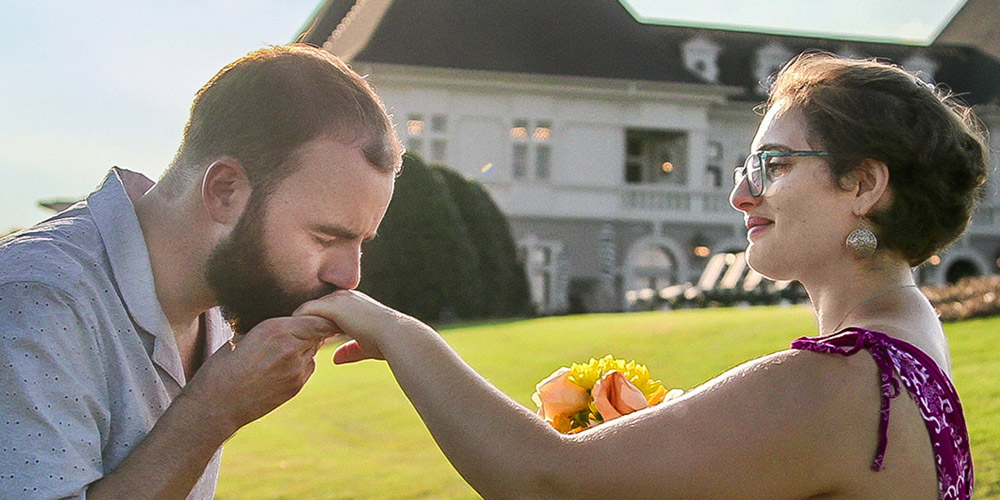

The storytelling has also matured. Earlier seasons focused heavily on first dates and initial connections; now, the series spends more time in the spaces that follow, house-hunting, navigating breakups, and, in one of the season’s defining moments, moving toward engagement.
The emotional stakes feel incrementally higher, but the approach remains restrained. There is still no attempt to manufacture conflict or accelerate outcomes for the sake of drama.
That restraint is central to the show’s identity. Under the guidance of creator Cian O’Clery and Northern Pictures, Love on the Spectrum continues to operate with a level of patience that is increasingly rare in unscripted television.
Scenes are allowed to breathe. Conversations unfold without interruption. The result is a series that feels less like constructed entertainment and more like documentation, even as it is carefully produced.
Future of the show
From Netflix’s perspective, the value is clear. Love on the Spectrum functions as a different kind of asset, a prestige-adjacent series that reinforces the platform’s range.
It is accessible without being reductive, emotionally resonant without leaning on manipulation. Renewing it for a fifth season is less about chasing momentum and more about sustaining a proven model.
What comes next will likely follow the established pattern: a blend of returning participants and new faces, with the emphasis remaining on lived experience rather than narrative engineering.
Connor Tomlinson’s departure opens space for new central figures, but it does not fundamentally alter the structure. If anything, it reinforces the idea that the show is designed to move forward by design, not by attachment.
That is ultimately where Love on the Spectrum distinguishes itself. It evolves, but slowly. It changes, but without signaling those changes as reinventions. And in a genre built on escalation, its refusal to do so continues to be its defining strength.
[ad_2]